
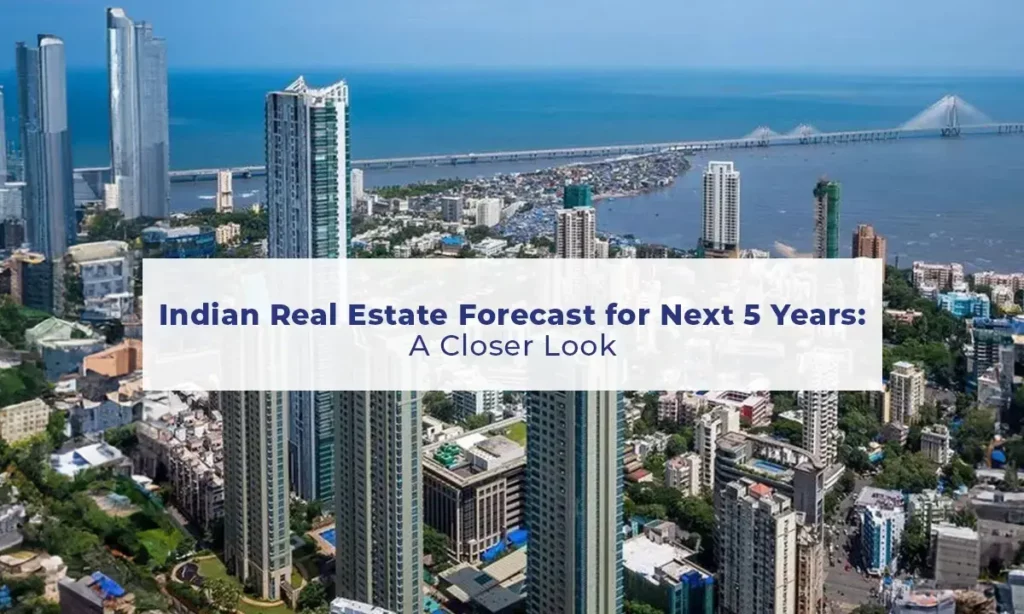
By 2031, real estate investments in prime Indian cities like Mumbai and Bangalore are expected to yield up to 13-15% returns per annum. So, it makes it the perfect time for homebuyers and investors to evaluate new opportunities in the real estate market.
At the same time, evolving work culture trends, including hybrid and remote work flexibility, are influencing buyer preferences and increasing residential demand across tier 1, tier 2, and tier 3 cities in India.
In this blog, we will unveil and examine the factors influencing the real estate market in India for the next five years. Join us on a compellingly informative journey to know what lies ahead in this exciting chapter of growth and evolution.
Whether you’re a buyer, seller, or investor, these insider insights from AsmitA India Realty will be your compass in forecasting and navigating the evolving trends of the Indian real estate industry.
Overview of India's Current Real Estate Market

An assessment of real estate growth in India in last 10 years shows that the market has witnessed robust growth, and real estate forecasting expects its trends to continue in the coming five years.
The current real estate market in India is influenced by factors such as favourable Government Policies like RERA and PMAY which increase demand interest in residential projects. Growing job opportunities are contributing to higher residential demand in IT-centric neighbourhoods and rapidly developing locations. Strong infrastructure development in the form of metro expansion, road development, and satellite town planning will positively impact real estate growth and property prices.
Real estate growth is marked by lower property rates and affordable housing options in Tier 2 and 3 cities. In comparison, Tier 1 cities are witnessing an increasing demand for high-end and luxury properties.
Despite the promising growth, the Indian real estate sector continues to grapple with challenges such as land acquisition issues, regulatory complexities, and periodic financial crises. For accountability, measures like the Real Estate Regulation Act (RERA) have been instituted to improve the real estate market in India.
The Real Estate Growth Rate in India

The current Indian real estate industry is estimated to have a market size of $0.33 trillion. By 2031, it is expected to reach $1.04 trillion, demonstrating a growing CAGR of 25.60% during the forecast period (2026 – 2031)
A Forecast of Indian Real Estate in the Next 5 Years
The next 5 years’ forecast will be a mix of opportunities and challenges, but the future looks bright. According to a joint report by KPMG and Naredco, India’s real estate market is expected to reach Rs 88 trillion by 2030, growing more than three times compared to its estimated size in 2025. The period between 2026 and 2031 is expected to offer strong opportunities for real estate investment and NRIs.Cities like Mumbai, Pune, Bangalore, Gurgaon, and Hyderabad are considered some of the best residential real estate markets in India due to their rapid urban development and strong investment potential.
At the same time, the adoption of PropTech, AI-driven analytics, and blockchain is expected to improve transparency, efficiency, and trust across the sector. While challenges such as project delays and financial limitations still exist, India’s real estate market continues to show strong resilience and long-term growth potential.
Best Cities to Invest in Indian Real Estate

India’s burgeoning economy is promising and profitable for the real estate sector, but certain cities stand out for lucrative returns on investment. In such cases, financial stability, growth projections, price appreciation, and ongoing infrastructure development play an important role.
Mumbai
In India, Mumbai is one of the top Tier-1 cities offering strong return on investment in spite of a high property prices. Areas like Mira Road, Malad, Chembur, and Kanjurmarg are expected to witness rising demand over the next five years due to expanding metro connectivity, improved infrastructure, and rapid residential and commercial development.
Mumbai real estate market, driven by its growing population and limited land availability, is dominated by reputed builders like AsmitA India Realty. Their latest award-winning project, like AsmitA Grand Maison, solidifies their position as a top builder in Mira Road, Mumbai. The region’s infrastructural development makes Mira Road one of the best residential areas in Mumbai.
Read more about the Future Development of Mira Road.
Pune
Pune is an attractive real estate hub for its excellent infrastructure, strategic location, educational institutions, and commercial enclaves. The city has a high demand for both residential and commercial properties.
Bangalore
Known as the Silicon Valley of India, Bangalore’s real estate market is booming due to the thriving IT industry and commercial ventures.
Delhi
India’s capital city boasts a diverse and dynamic real estate market—driven by its political significance, robust infrastructure, and a mix of residential, commercial, and retail developments. Its strategic location and continuous urban development make it a favourable investment destination.
Factors to Consider in Real Estate Investment

Key factors in deciding investment for the real estate future in India include location (with proximity to essential services like schools, markets, and hospitals) and infrastructure development (such as road projects and metro connectivity). This not only boosts property value but also makes for comfortable living.
Other important considerations are the developer’s reputation, certain economic indicators (like favourable interest rates and inflation trends), and integrating modern technologies in properties.
In recent years, several reputable developers like AsmitA India Realty have integrated smart home technology into their affordable but premium projects to enhance the investment’s value, utility, and appeal.
How Technology is Transforming Real Estate in India
Home buyers no longer want to spend an entire weekend visiting multiple properties or waste hours sitting in traffic. With advanced technologies like 3D virtual tours and augmented reality (AR), buyers can now explore apartments, amenities, and layouts directly from their phones or laptops.
Digital transformation in real estate is also making the property-buying process faster and more convenient. Features like online property listings, AI-powered property recommendations, and digital documentation help buyers make informed decisions with less hassle.
Takeaway
The Indian real estate market will change significantly in the next five years. The sector is developing many opportunities for homebuyers and investors with rapid infrastructure development, expanding metro networks, smart city projects, and a growing demand for quality housing. Technology is also changing the way people search, compare, and buy properties, making the entire experience more seamless and transparent than ever before.
Frequently Asked Questions
Is Indian real estate a good investment in the future?
Yes, India real estate is considered a good investment in future Over time, real estate investment promises a stable and appreciating return through rental income and property price appreciation.
What factors are driving the growth of the Indian real estate market?
Factors like favourable government policies, technology, a surge in urbanisation, rising disposable incomes, and increasing demand for infrastructure.
Which are the best Tier 1 cities for real estate investment in India?
Despite their high property rates, the Indian cities of Mumbai, Bangalore, Pune, and Delhi are considered best for investment.
Which are the top-tier 2 city in india for high ROI?
City like Jaipur, Lucknow, Nagpur, Indore, Kochi, Ahmedabad, Chandigarh, and Coimbatore are considered strongest Tier-2 cities with the combination of affordability, infrastructure growth, rental income, and long-term investment.