
A Building Completion Certificate is an official document issued by a municipal corporation confirming that a building has been constructed according to the approved plans and regulations.
Buying a property is one of the biggest financial decisions most people make. While buyers often evaluate location, pricing, and amenities, the true safety of an investment lies in its legal documentation. A property that looks perfectly constructed can still create serious problems if it does not have the required approvals.
One such crucial approval in real estate is the building completion certificate. This document plays a key role in ensuring regulatory compliance and enabling smooth registration, loan processing, and utility activation. Without it, a property may face legal penalties, loan rejection, utility issues, and resale difficulties.
Quick Glance
- A Building Completion Certificate (CC) is an official document confirming that construction matches the approved building plan.
- In most municipalities, it is required before property registration, home loan approval, and activation of electricity and water services.
- The process of obtaining the Completion Certificate typically takes three to six weeks after application, depending on property size and local regulations.
- An occupancy certificate cannot be issued unless a completion certificate has first been granted by the local authority.
- Possessing a completion certificate protects property owners from legal disputes, financial losses, and resale complications.
What Is a Completion Certificate?
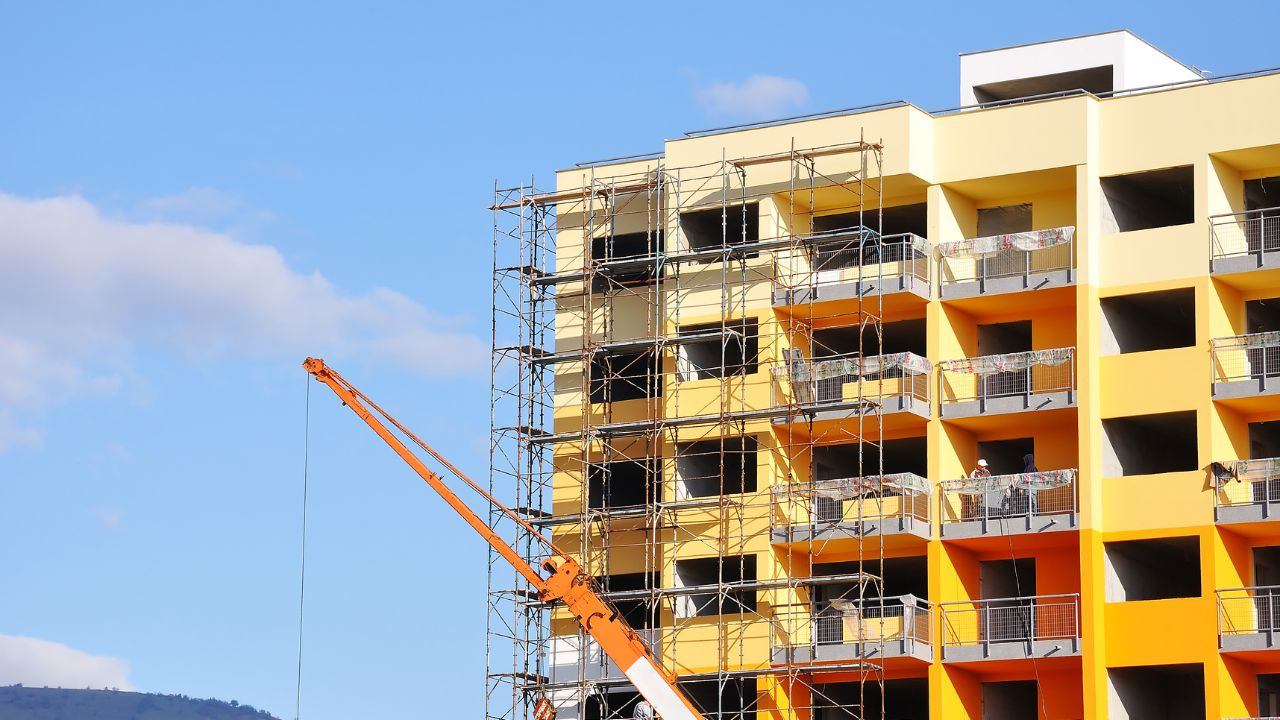
A completion certificate in real estate is an official approval issued after construction is completed and verified by the local authority. It formally confirms that the building has been constructed exactly in accordance with the sanctioned plan and approved specifications.
Prior to starting construction, the developer submits a building plan to the local authority detailing the layout of the property, the number of floors, the structural design of the building, the maximum height, and what type of land use is permissible. The authority examines the plan to determine if it complies with local regulations prior to giving approval.
Following the completion of construction, the municipality inspects the site to compare the constructed building with the drawings submitted with the approved building plan. If the building is constructed as depicted in the drawings and conforms to all regulatory requirements, then the completion certificate is issued.
A completion certificate usually includes the following:

- Information about the real estate property
- All aspects of the particular building plan
- Details about the real estate builder
- Approved building or flat height
What does a Completion Certificate Include?
A completion certificate is a document that outlines various items that indicate compliance with approved plans and regulations:
- Address of the property and land survey number
- Reference number of the approved building plan
- Name and contact information of the developer/property owner
- Confirmation that the Floor Space Index limits were complied with
- Number of floors and building height as approved
- Details regarding structural safety certification
- Date of inspection
- Official seal and signature of the issuing authority
Each of these factors helps establish that the building was legally constructed.
Who Issues a Building Completion Certificate?
The authority responsible for providing the completion certificate depends on the geographic area where the property is located.
- Municipal Corporations in larger cities
- Urban Development Authorities in planned development areas
- Municipal Councils in smaller towns
- Gram Panchayat in rural locations
Each authority has its own procedure for inspecting and approving.
Why is a Completion Certificate Important?
A building completion certificate confirms the legality of a property. Without a completion certificate, a building does not have official recognition from local authorities.
Its importance exists in multiple areas:
- Verification that the construction has conformed to the approved building plan
- Eligibility for connection to electric power, water and sewage
- Supports property registration and transfer of title
- Pre-requisite for obtaining an occupancy certificate
- Increased confidence of the buyer and enhanced resale value
From a buyer’s standpoint, this certificate minimises regulatory risks and demonstrates that the property is legally secure for long-term possession. Under RERA regulations, the certificate also validates that consumer protection standards have been met throughout the construction period.
Where is a Completion Certificate Necessary?
Generally, a building completion certificate is necessary in virtually all urban and semi-urban areas for a variety of critical functions.
It is necessary for:
- Registration of the property and legitimate transfer of title
- Approval of home loans or mortgages
- Activation of electricity and water services
- Issue of an occupancy certificate
- Sale of the property
Without this document, authorities may deny or delay approvals, or financial institutions may refuse to fund.
What Happens if a Building Has No Completion Certificate?
Not having a building completion certificate may lead to severe consequences:
- Denial of funding for a home loan
- Denial of access to utilities such as electricity, water, etc.
- Potential imposition of a penalty (up to 10% of the project cost) or imprisonment
- Denial of an occupancy certificate
- Decrease in resale value
Therefore, it is crucial for buyers to verify the presence of a completion certificate prior to purchasing a property.
Inspection and Approval Process
Site inspections are not just administrative. Authority representatives physically examine whether the building was constructed in conformity with the approved building plan.
What do Authorities Check During Inspection?
When conducting an inspection, authority representatives check:
- Alignment of the floors of the building with those shown on the approved plans
- Compliance with the approved height of the building
- Setbacks from roads and adjacent plots as stipulated in approved plans
- Balconies and extensions to approved boundaries
- Internal layouts conform to approved drawings
- Existence of additional unauthorised rooms or changes to the structure
- Validity of structural safety certifications
If deviations are found, they are classified as unauthorised construction. For example, building an extra floor or enclosing an open terrace without approval can result in rejection of the application.
Completion Certificate Process in India
The process for getting a building completion certificate broadly involves the same procedure all over India, with minor variations in the procedural aspects of the concerned states. Even if different document formats and online application portals are involved, on-site inspection and physical verification must still be done before approval is given.
Maharashtra: The Municipal Corporation or planning authority issues the building completion certificate after reviewing the submitted documents and conducting a site inspection. In cities like Mumbai and Pune, the initial steps for applying for a completion certificate for building projects are increasingly handled through online municipal portals, though inspection is conducted physically.
Other States: In Karnataka, Delhi, Gujarat, and Tamil Nadu, a similar procedure is followed. The municipal authority reviews the application, verifies compliance with the sanctioned plan, conducts an inspection, and issues the completion certificate only after confirming that construction has been carried out as approved.
How to Get a Completion Certificate for a Building?
To obtain a completion certificate for a building, the developer or property owner must apply to the relevant municipal authority after construction is fully completed.
The application can be submitted online or offline, depending on local procedures, and must include the sanctioned building plan, safety NOCs, and the architect’s completion report, along with other required documents.
Once the application is received, officials conduct a site inspection to verify that the construction complies with the approved plans. If deviations are identified, necessary corrections must be made before approval. After successful verification, the authority issues the building completion certificate.
Documents Required for a Completion Certificate
Typical documentation required to obtain a completion certificate includes:
- Completed application
- Copy of approved building plan
- Structural Safety Certificate
- Proof of payment of property taxes
- NOC from the fire department as applicable
- NOC for the lift for multi-story buildings
- Approvals for sewage and water supply
- Electricity compliance certificate
- Encumbrance certificate
Providing all documentation required reduces processing time.
Online vs Offline Application Process
Some jurisdictions permit applicants to submit their applications online, while others require the physical submission of documents. In many states, applicants can also download completion certificates through municipal portals after approval.
- Offline process: Applicant needs to submit physical documentation to the local authority and follow up manually.
- Online process: Applicant can upload documentation electronically via the portal of the local authority, track the status of the application digitally, and obtain the certificate electronically upon approval.
Regardless of the method used, a physical site inspection is always required.
Completion Certificate Format and Types
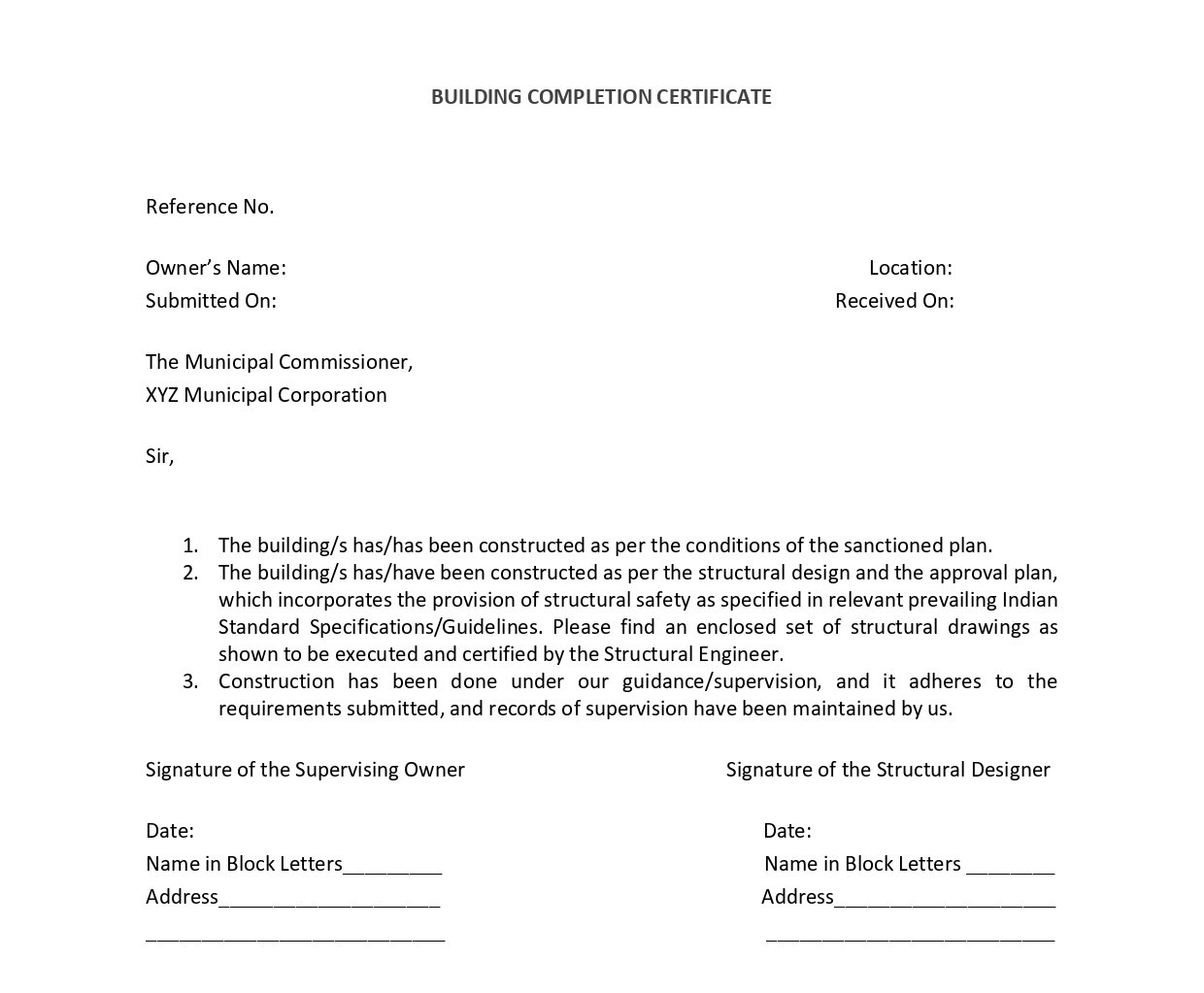
Understanding the format of a building completion certificate helps property buyers verify its authenticity. While the layout may vary slightly between municipal authorities, most certificates follow a standard structure and contain specific identifying details.
Format of a Building Completion Certificate
The standard completion certificates contain the following details:
- Authority name and logo
- Certificate number and issue date
- Identification of the property
- Reference to the approved building plan
- Confirmation that the building was constructed in compliance with the approved plans
- Official seal and signature
This standardised format assists in establishing the legitimacy of the completion certificate and enhances the validity of the document.
What is a Provisional Completion Certificate?
A provisional completion certificate may be issued prior to completion of all finishing elements when the majority of the regulatory requirements have been fulfilled. The provisional completion certificate is valid for six months and is usually used as a transitional document until the permanent one is issued.
However, final legal recognition requires issuance of the permanent completion certificate.
Completion Certificate vs Other Property Certificates
A completion certificate is essential, but it is not the only document required for property approval. There are other key property certificates that are also required to be issued at various stages of construction and possession.
Difference Between a Completion Certificate and a Commencement Certificate
A commencement certificate is issued before construction begins and grants official permission to start building work according to the approved plans. It confirms that the project has received initial regulatory clearance from the local authority.
On the other hand, a building completion certificate is issued after construction is completed and is confirmation that the building was constructed in conformity with the approved plans.
While the commencement certificate permits the construction to commence, the completion certificate confirms that the construction has been completed in accordance with the plans.
Completion Certificate vs Occupancy Certificate
Although completion certificates and occupancy certificates are often confused, they serve different purposes.
As outlined in Section 2(q) of the RERA Act, the completion certificate is confirmation that the residential project was constructed in accordance with the approved plans and specifications.
An occupancy certificate is issued after the completion certificate and confirms that the building is safe and habitable for the residents to occupy.
While the completion certificate validates construction compliance, the occupancy certificate authorises the residents to occupy the building.
Conclusion
A building completion certificate is a document that confirms that a building has been constructed in conformity with the approved plans and in accordance with local regulations. A completion certificate protects buyers, facilitates funding approvals, and preserves long-term property values.
At AsmitA India Realty, regulatory compliance and transparent documentation are fundamental priorities, ensuring that every property we deliver provides lasting security and peace of mind.
Frequently Asked Questions
What is a completion certificate in real estate?
A completion certificate is an official document issued by a local authority confirming that a building has been constructed according to the approved plan and municipal regulations.
Why is a completion certificate important for property owners?
A completion certificate for a house or a building is important because it confirms that the construction is legally done and is compliant with approved plans. It helps prevent legal issues and supports loans, utilities, and resale transactions.
Is a completion certificate mandatory in India?
In most urban and semi-urban areas, a completion certificate is mandatory for property registration, loan approvals, and utility connections. It is generally required for legal recognition of the property
Who issues the completion certificate for a building?
The completion certificate is issued by the Municipal Corporation, Development Authority, Municipal Council, or Gram Panchayat, depending on the property’s location. It is granted after a physical inspection confirms compliance.
How to apply for a completion certificate online?
Where online services are available, the builder or property owner can apply through the official municipal website by uploading required documents. The certificate is issued after inspection and approval.
What documents are required to get a completion certificate?
Required documents usually include the approved building plan, structural safety certificate, property tax receipts, relevant NOCs, and a completed application form. Additional documents may be required based on local rules.
What is the difference between a completion certificate and an occupancy certificate?
A completion certificate confirms construction compliance with approved plans. An occupancy certificate confirms that the building is safe and legally ready for residents to move in.
Is a completion certificate required for home loans or property registration?
Yes, banks and registration authorities typically require a completion certificate to verify that the building has been legally constructed and approved.
What happens if a building does not have a completion certificate?
A building without a completion certificate may face loan rejection, utility denial, legal penalties, and reduced resale value due to compliance concerns.
How long does it take to get a completion certificate from the municipal authority?
The process usually takes a few weeks after application and inspection. Timelines vary depending on the municipality and document verification.