
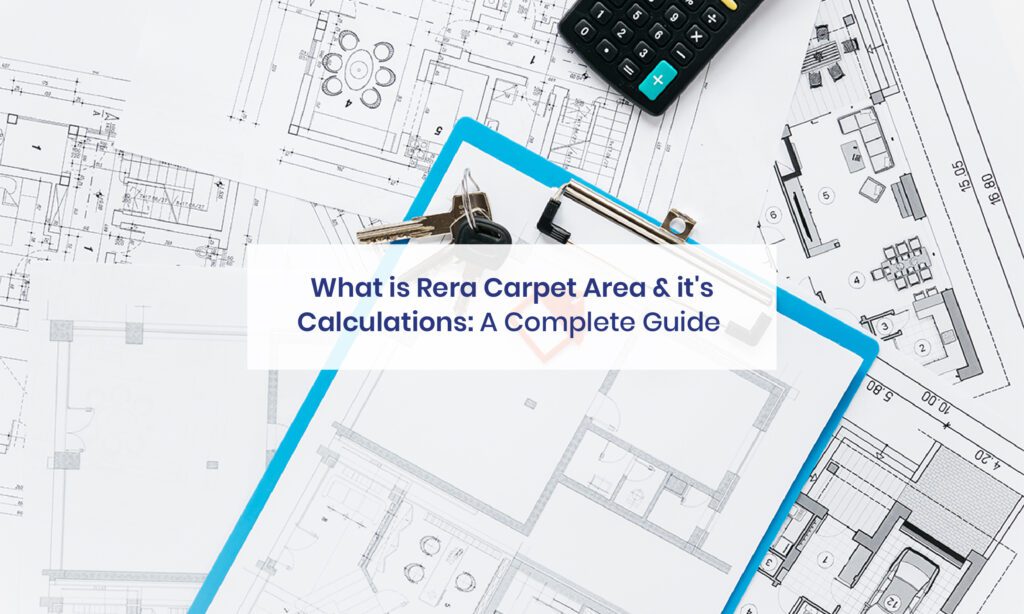
RERA stands for Real Estate (Regulation and Development) Act 2016, which brings transparency and accountability to real estate transactions. Let’s understand what carpet area means under RERA, how it is calculated, and why it matters to homebuyers.
Home buying is a long-term obligation, and understanding the area of the properties you may buy will allow you to make better decisions. Many terms used by builders and agents, such as carpet area, built-up area, and super built-up area, can be really confusing. The RERA carpet area provides clarity for the consumer in the purchase process.
The importance of the RERA carpet area is especially significant in a legal and financial sense. According to the RERA (Real Estate Regulation and Development) Act 2016, the builder needs to disclose these areas to the buyer. This makes things much more transparent in a practical sense, and the buyer gets to know exactly what they are paying for, without room for confusion or misconception.
RERA Carpet Area Definition Explained In Simple Terms

The RERA carpet area definition, as defined by the Real Estate Regulation and Development Act, defines the “net usable floor area” of an apartment. This includes the internal partition walls but excludes the exterior walls, balconies, terraces, verandas, and other common features of the building, such as stairs and elevators.
By legally standardising the definition of carpet area, RERA ensures uniformity and clarity in how residential space is measured and disclosed. Unlike earlier practices, developers are now required to adhere strictly to this definition, leaving no scope for variations in what can be included or excluded.
This standardisation improves transparency in property transactions and helps buyers make informed comparisons based on clearly defined, legally backed measurements.
Difference Between Carpet Area and RERA Carpet Area
Carpet area and RERA carpet area are often used interchangeably when discussing properties. There is, however, a critical legal difference between the two that should be considered when documenting your property and determining its price.
Here is the difference between carpet area and RERA carpet area:
Traditional carpet area
This term was commonly used before regulation and did not follow a uniform calculation standard. The inclusion or exclusion of internal walls could vary, depending on the methodology adopted for measurement and disclosure.
Carpet area as per RERA
This follows a legally defined and standardised calculation method. It includes internal partition walls and applies the same measurement logic across all projects, enabling consistent disclosure and easier comparison.
Understanding this difference between carpet area and RERA carpet area helps buyers avoid paying for assumptions and ensures the sale agreement reflects usable space accurately.
Why is the RERA Carpet Area Important For Buyers?
For home buyers, the RERA carpet area is important because it helps with comparisons and legal issues related to property pricing, documentation, and transparency when comparing properties from different projects.
This clarity also impacts pricing, the strength of contractual commitments, and having consistent resale communications.
- With the use of RERA carpet area as the basis for pricing in sales contracts, buyers will have a common measurement to base their comparison of properties across all project types. This also removes the need for buyers to rely on the varied definitions of Super Built-Up Area when determining the overall value of a property.
- Including the amount of RERA carpet area in the sales contract creates a legally enforceable commitment. If the amount of RERA carpet area provided at closing is less than what was agreed upon, RERA will provide remedies to the buyer, creating a level of accountability regarding how space is communicated to and delivered to the buyer.
- As the concept of RERA carpet area continues to be recognised and understood by homebuyers, the use of a standardised area definition will assist in maintaining consistency in valuation and create comfort and trust during resale negotiations.
Overall, the use of RERA carpet area will promote increased transparency and help balance the disparate measurements that previously influenced the conversation.


How To Calculate RERA Carpet Area With A Practical Example
The majority of calculations are dominated by formulas, and it is at this point that confusion arises. We will take this step by step and ease the way of computing how to calculate the RERA carpet area.
Let us assume that an apartment has the following floor plan dimensions:
- Living Room: 150 Sq Ft
- Bedroom 1: 120 Sq Ft
- Bedroom 2: 110 Sq Ft
- Kitchen: 80 Sq Ft
- Bathroom: 60 Sq Ft
- Partition Walls within the Building: 30 Sq Ft
- Balcony: 40 Sq Ft
- Exterior walls: Excluded
Under carpet area as per RERA, the following are not included:
- Balcony: 40 Sq Ft
- Exterior Walls: Excluded
The RERA carpet area of the apartment is computed as follows:
Add only the allowed areas:
150 + 120 + 110 + 80 + 60 + 30 = 550 Sq Ft
So, the RERA carpet area of the apartment is 550 sq ft
The exclusion of balconies, terraces, and exterior walls accounts for why sizes disclosed under RERA will generally seem less than those sizes previously stated as measured by other measurement methods or standards.
A RERA carpet area calculator can also be used to confirm the total, but using the calculator provides confidence to buyers when reviewing the property’s specifications.
Related: Why Are Firefighting Systems Essential In High-Rise Buildings?
How Buyers can Verify RERA Carpet Area Before Purchase?

It’s also important for the buyer to confirm all of the area specifications included in the sales agreement. Although the developer will be required to disclose the RERA carpet area, the buyer can confirm that the area provided in the sales agreement is correct by reviewing the same information.
Here are some simple things that you can do:
Review RERA registration details
All registered projects provide key details regarding the project on the RERA website, including the RERA carpet area for each unit type. Review the details available on the RERA website and compare them to those provided in the marketing materials or contractual agreements.
Verify the agreement to sale
The agreement should clearly indicate the carpet area as per RERA. In addition to verifying the area, review how the usable area is defined and if there are any specific terms before signing.
Obtain a layout plan with measurements
A floor plan displaying room-by-room measurements allows the buyer to understand how to calculate the RERA carpet area and identify any discrepancies early.
It is important for buyers to verify the area specifications mentioned in the sale agreement. While developers are required to disclose the RERA carpet area, buyers may review these details to ensure they align with the stated measurements.
Common Buyer Mistakes Around RERA Carpet Area
It is very easy to fall into traps despite the existence of the RERA Act. The knowledge of these errors can guide you to be a step ahead.
- Include balconies or terraces when calculating the RERA carpet area, even though these are excluded under the RERA carpet area definition.
- Compare property prices using built-up area for one project and RERA carpet area for another, which alters price comparisons.
- Encounter terms such as “saleable area” in documentation and interpret them without reference to carpet area as per RERA. Saleable area is a builder-defined term, and not a standardised legal measurement. In most projects, the saleable area is typically 25% to 40% higher than the RERA carpet area.
- Assess price per square foot without accounting for the difference between carpet area and RERA carpet area.
Knowledge of the distinction between carpet area and RERA carpet area keeps the buyers safe against these expensive misconceptions.
Legal Protection and Penalties Under RERA
Legal enforceability of disclosures: RERA ensures that disclosures made by developers become legally meaningful when included in official filings or sale agreements. This includes disclosures related to RERA carpet area, but differences in area do not automatically result in a violation.
Registration requirements
RERA requires real estate projects to be registered with the authority. Penalties related to registration apply only when a project is not registered as required, and not solely because of an area-related issue.
Compliance with authority directions
Developers are required to comply with directions issued by the RERA Authority. Enforcement measures apply when such directions are not followed, including directions to correct or clarify disclosures where applicable.
Misleading advertisements and disclosures
RERA provides remedies where buyers have relied on incorrect or incomplete information while making a purchase decision. The applicability of these remedies depends on the facts of the case.
General regulatory violations
The Act includes provisions that apply to breaches not covered under specific categories. Whether these apply depends on the nature of the non-compliance involved.
Overall applicability
Disclosures related to carpet area as per RERA carry legal significance when they are inaccurate, misleading, or inconsistent with regulatory filings. Buyer remedies arise from the specific violation involved, rather than automatically from any variation in the stated area.
These provisions are to make sure the rera carpet area disclosure has a legal effect, buyers can have significant protection and definite solutions in case of false information or failure.
RERA Carpet Area And Project Types
RERA carpet area applies to all projects that must be registered with RERA. This requires the registered projects to disclose area details, including RERA carpet area, not whether or not the project is under construction or completed.
Under-construction projects
Under-construction projects that are registered under RERA disclose area details, including RERA carpet area, as part of their project information.
Ready-to-move-in projects
Ready-to-move-in projects also follow carpet area as per RERA when they fall within the RERA registration framework.
Scope of application
Where a project is not required to be registered under RERA, the Act’s carpet area disclosure requirements do not apply.
Final Thoughts
Learning about the RERA carpet area goes beyond just understanding definitions. It affects how you evaluate space, compare pricing, and create expectations during a property transaction. Reliable methods of calculating area, uniform disclosures, and the support of the law provide a solid foundation for making decisions.
For homebuyers, reviewing the RERA carpet area as per RERA, comparing prices on a like-for-like basis, and carefully checking documentation can help evaluate offerings more accurately.
Frequently Asked Questions
1. How can a homebuyer verify the RERA carpet area mentioned by a developer?
Buyers can verify the RERA carpet area by checking RERA project registration details, reviewing the agreement of sale, and comparing floor plans with carpet area as per RERA guidelines.
2. Is the RERA carpet area mentioned in the sale agreement legally binding?
Yes. When the RERA carpet area is stated in a registered sale agreement, it carries legal significance, and remedies may be available if there is a shortfall.
3. Does the RERA carpet area apply to under-construction and ready-to-move-in projects?
Yes. RERA carpet area applies to both under-construction and ready-to-move-in projects, as long as the project is registered under RERA.
4. What is the difference between carpet area and RERA area?
The difference between carpet area and RERA carpet area lies in standardisation. Carpet area as per RERA follows a defined method that includes internal walls and excludes balconies, terraces, exterior walls, and common areas.
5. How is the RERA carpet area calculated?
To calculate the RERA carpet area, add all usable room areas and internal partition walls, and exclude balconies, terraces, external walls, and common spaces. A RERA carpet area calculator may assist, but floor plans provide clarity.