
Latest Redevelopment Rules for Housing Societies in Maharashtra
- AsmitA India Realty
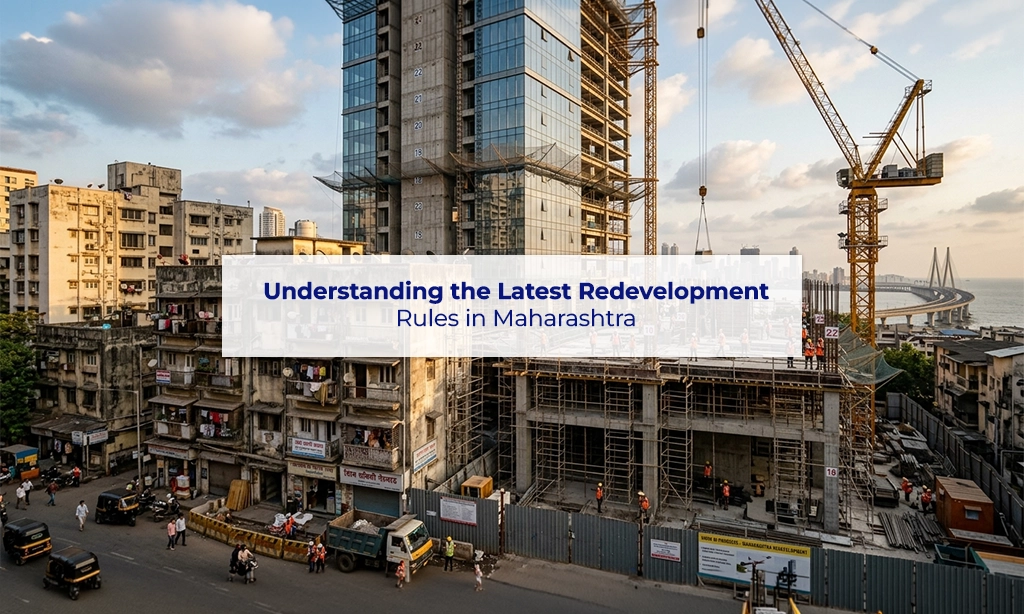
Housing societies in Maharashtra are increasingly opting for redevelopment due to ageing buildings, rising maintenance costs, and outdated infrastructure. Maharashtra’s updated redevelopment rules are designed to increase transparency, speed up approvals and protect members during redevelopments.
This guide provides a step-by-step explanation of the latest redevelopment rules for housing societies in Maharashtra, including member consent, RERA compliance, UDCPR Maharashtra guidelines, FSI benefits, TDR calculations, OC timelines, and redevelopment in Mira Bhayandar.
What are the New Redevelopment Rules for Societies in Maharashtra?
The new rules for redevelopment of society projects in Maharashtra are mainly governed by three frameworks:
- Section 79A Maharashtra
- UDCPR Maharashtra
- RERA regulations
The revised rules aim to make redevelopment more transparent and legally sound. The revised rules also improve member protection and developer accountability.
Key highlights include:
- More clarity in the developer selection process
- Greater security for society members
- Improved planning and approval processes under the UDCPR regulations
- More monitoring under RERA compliance
- Clearer documentation procedures
In addition, the Maharashtra Government has been recommending to societies to use professional consultants and follow a proper redevelopment process before entering into any agreement with a developer.
What is the Minimum Legal Consent Required for Redevelopment?
Under the revised redevelopment guidelines issued under Section 79A Maharashtra, at least 51% member consent is required to approve redevelopment proceedings and pass the resolution at the Special General Meeting (SGM).
Previously, the 70% consent rule for redevelopment was widely applied. Many developers and authorities still like to have a higher consensus, typically 70%, before entering into the final development agreement, to minimise future disputes and litigation.
What Happens if Consent is Not Achieved?
Without the required majority, redevelopment approval may be delayed or challenged legally. Possible consequences include:
- Delay in redevelopment approval
- Conflicts between members of the society
- Developer talks being delayed
- Complaints before the Registrar of Cooperative Societies
If dissenting members feel that the procedures were not followed properly, they can also take legal action against redevelopment decisions.
Tips to Get Faster Consent from Society Members
Clear communication about compensation, timelines, and legal safeguards can help societies get faster member consent. Useful practices include:
- Hold pre-SGM discussions with members
- Provide detailed rent and corpus calculations
- Conduct presentations by the shortlisted developers
- Make the benefits of the carpet area clear
- Advise members to seek independent legal advice
What Are the Responsibilities of a PMC in Redevelopment Projects?
The role of PMC in redevelopment projects is to guide societies through developer selection, documentation, project monitoring, and redevelopment planning while protecting member interests.
A PMC will provide independent advice to the society and will be able to help protect the interests of all members during the project.
Key responsibilities include:
- Preparing and issuing tenders for redevelopment work
- Evaluating developer bids and qualifications
- Managing the project schedule and quality of construction
- Reviewing development agreements
A qualified PMC will also help societies understand technical aspects of their redevelopment project, such as FSI, TDR, and the feasibility of the redevelopment and rehabilitation planning.
Common Mistakes Societies Make Without a PMC
Without professional guidance, societies can encounter unnecessary legal and financial problems.
Common mistakes include:
- Unclear development agreements accepted
- No financial background checks of developers
- Poor planning of rehabilitation benefits
- Absence of construction monitoring
- Poor project time management
Professional supervision can greatly minimise redevelopment risks.
What are the UDCPR Guidelines for Cooperative Housing Societies in Maharashtra?
UDCPR Guidelines for Redevelopment standardise planning rules for redevelopment projects across Maharashtra, including FSI, parking norms, setbacks, and TDR usage.
The UDCPR rules include the following:
- Permissible FSI
- Incentive FSI benefits
- Parking norms
- Height restrictions
- Open space requirements
- Setback regulations
- TDR usage conditions
These guidelines make redevelopment approvals easier and more consistent among urban regions.
What is the maximum FSI allowed under UDCPR for redevelopment?
The FSI Rule under UDCPR Maharashtra varies according to plot size, road width, redevelopment category and municipal location under the UDCPR rules. The base FSI can vary from 1.10 to 2.50 in many municipal corporation areas. Effective FSI can be greater than 3.0 when combined in select redevelopment projects:
- Base FSI
- Incentive FSI
- Premium FSI
- TDR benefits
Other FSI benefits may also be possible in case of old or inferior quality buildings, cluster redevelopment, and contributions to public infrastructure.
How is TDR calculated in redevelopment projects?
In redevelopment, TDR, or Transferable Development Rights, is a mechanism that allows property owners to transfer their unused development potential from one plot of land to another.
The formula to calculate TDR varies by city and redevelopment scheme, but the core calculation structure remains the same. Here’s how it is calculated:
TDR Area Formula: Plot Area x Additional Permissible FSI
This calculates the additional built-up area granted through TDR. Then, the formula for total permissible built-up area is:
Total Built-up Area = Plot Area x (Base FSI + Additional TDR FSI)
In redevelopment projects, the final TDR entitlement may also depend on several other factors, including road width, zoning regulations, rehabilitation obligations, premium payments, fungible FSI provisions, and local Development Control Regulations (DCR).
Which legal documents are required for the society redevelopment tender in Maharashtra?
Proper documentation is necessary for the successful redevelopment of housing societies in Maharashtra.
Some of the important documents are:
- Society registration certificate
- Audit reports
- Property card or 7/12 extract
- Structural audit report
- Building plans
- Carpet area details of members
- Society resolutions
- Drafts of the development agreement
- Tender documents
- NOCs from local authorities (if any)
Project timelines, corpus fund, rent compensation, FSI, etc., should be mentioned in the redevelopment tender document.
Read More: What is corpus fund in real estate?
What is the RERA rule in redevelopment projects?
The RERA rules for redevelopment state that projects with third-party flat sales or projects that exceed the construction and unit limits must be registered with MahaRERA.
RERA registration guarantees:
- Transparency in the execution of projects
- Accountability
- Quarterly progress on projects
- Avoidance of project delays
- Publication of approvals
Before executing any redevelopment agreement, one must verify the registration number of MahaRERA.
What happens if a redevelopment project is not registered under RERA?
If the developer fails to register an eligible project under RERA, it could lead to financial penalties and legal proceedings against the developer.
Possible consequences include:
- Heavy monetary penalties
- Marketing restrictions for the project
- Higher legal liability of members
- Complaints before MahaRERA
If there is no RERA, societies might be at a higher risk of facing delays, financial misuse or construction disputes.
How does cluster redevelopment work in Maharashtra?
Cluster redevelopment is the redevelopment of more than one contiguous building or plot as a single project. This model is often applied in high-density urban settings where it is challenging to redevelop individual sites.
Key features include:
- Shared infrastructure planning
- Better utilization of FSI
- Improved urban design
- Larger rehabilitation capacity
- Broadened streets and open areas
The redevelopment of a cluster typically involves significant coordination with a number of societies, developers, consultants and local authorities.
Society Redevelopment Rules in Mira Bhayandar: MBMC & UDCPR Guidelines
The regulations for redevelopment in Mira Bhayandar are controlled by MBMC redevelopment rules, MBMC Building Rules and UDCPR Guidelines for Redevelopment.
Some of the key approvals are:
- Building plan sanction
- Layout approval
- Drainage and water NOCs
- Fire department clearance
- Environmental compliance approvals
The entitlement of FSI in Mira Bhayandar is generally as per the applicable schedules under UDCPR Maharashtra for municipal corporation areas. Redevelopment in Mira Bhayandar has increased significantly due to ageing buildings and revised MBMC redevelopment rules.
How much time is required to get an Occupation Certificate (OC) in redevelopment?
An Occupation Certificate (OC) is a document that certifies that the building has been built to a legal standard and is safe for people to occupy.
In reality, the time for OC approval can vary from a few weeks to months, depending on:
- Project size
- Fire safety approvals
- Lift inspection clearances
- Drainage and utility approvals
- Following approved plans
Bottom Line
Maharashtra housing societies can take advantage of redevelopment for safety, living standards and property value. However, before beginning the process, it is important to understand the latest redevelopment rules, consent requirements, RERA compliance and UDCPR guidelines. Through proper planning and guidance from a qualified PMC, societies will be able to ensure smoother approvals, transparency, and long-term redevelopment success.
Frequently Asked Questions
Is 51% or 70% consent required for the redevelopment of a housing society?
New redevelopment rules allow for 51% member consent to start redevelopment proceedings. But many developers and societies still like to have a higher consensus, typically 70% or more, before final agreements are made to minimise future disputes.
What happens if some members do not agree to redevelopment?
Dissenting members can legally oppose redevelopment via the Registrar or court. But the majority of approved redevelopment projects tend to go on as long as proper procedures are followed.
Is RERA registration mandatory for redevelopment projects?
Yes. Prescribed construction thresholds and projects with third-party flat sales are mostly registered under MahaRERA under RERA rules for redevelopment.
How long does it take to complete a redevelopment project?
The average time for most redevelopment projects is 3 to 5 years. Approval and construction complexity may extend the time for larger or cluster redevelopment projects.
How many members are needed for Redevelopment Approval?
Under current redevelopment guidelines, at least 51% member consent is required for the redevelopment process.
Do agents need registration for redevelopment projects?
Yes. RERA agents who are engaged in the marketing of redevelopment projects need to get a valid MahaRERA registration.
What are the things to check before signing the redevelopment agreement?
Before signing a redevelopment agreement, societies should verify the corpus fund, rent compensation, carpet area entitlement, construction timelines, delay penalties, and MahaRERA registration details.
Table of Contents

Latest Blogs
Hot Property