
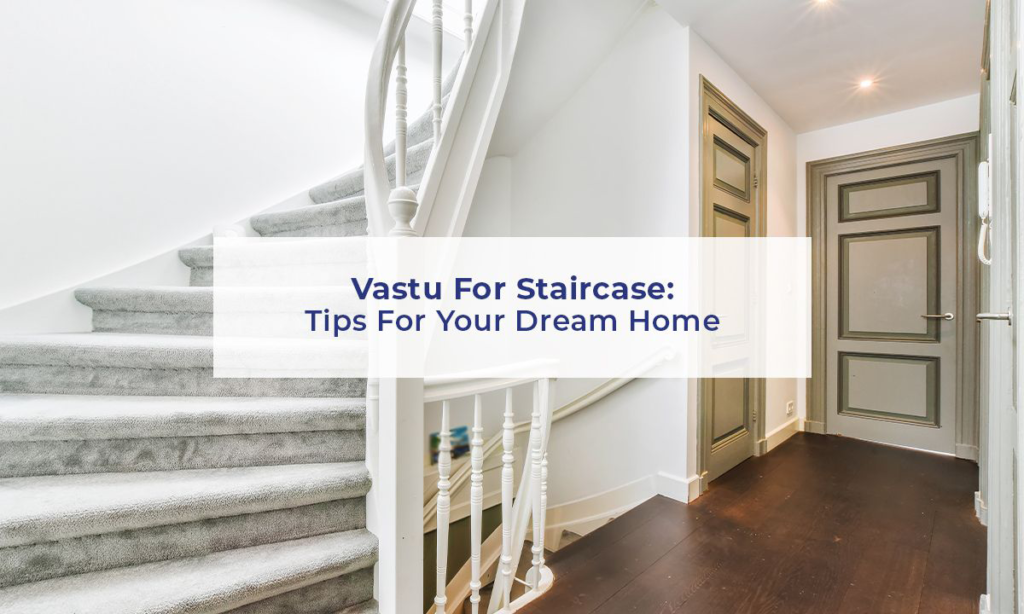
Does the placement of a staircase affect the flow of energy in your home? Short Answer: Yes, it does. This guide explains the Vastu principles for staircases, including ideal direction, placement, and their impact on your living space.
When people are designing a home, the staircase is the last thing to be discussed, yet it silently dictates the movement of energy between the floors on a daily basis. According to traditional Vastu beliefs, the staircase plays a symbolic role in influencing how energy is perceived to move within a home.
As per Vastu for staircases, the location, direction, movement, and size of staircases are traditionally believed to determine whether energy moves or gets stagnant within the house. So, where to place the staircase when designing a home so there is no disruption in this energy channel which affects a home’s energy dynamics and influences the well-being and prosperity of its residents?
This guide breaks down staircase Vastu in a simple and practical way, helping you understand how these principles can be commonly applied while planning a space.
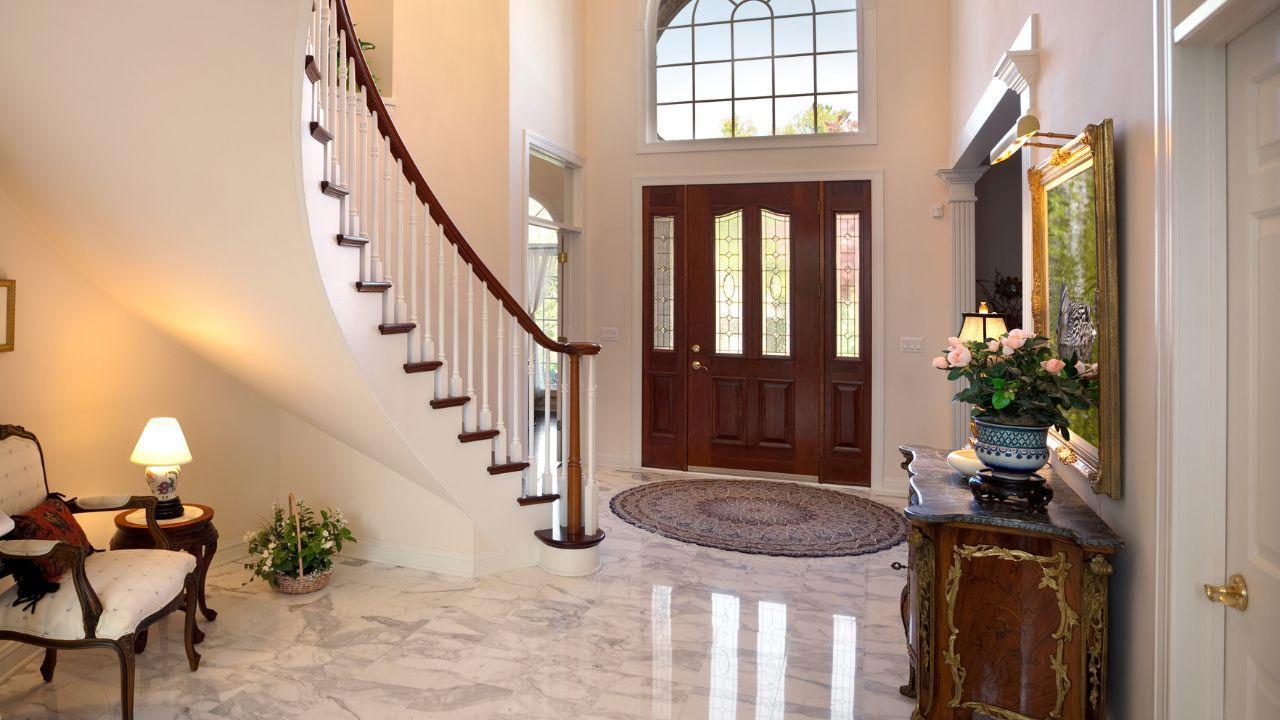
Why Staircase Placement Matters In Vastu?
Vastu considers energy as an automatic flow within a house, which enters the house through doors and windows, and circulates up the levels.
And Staircase placement, as per Vastu, decides whether the staircase supports energy movement or interrupts it. So, here’s how a staircase impacts the flow of energy:
- Energy Flow Impact: A staircase that is put in the right zone enables the energy to ascend slowly and evenly on the levels. When placed in an incorrect zone, energy rushes or gets stuck, which is believed to create restlessness, fatigue, or frequent disagreements among family members.
- Structural Stability Link: As per Vastu staircase traditions, staircases also represent load-bearing movement. When placed in unstable directions, they are thought to symbolically pull down growth and consistency, particularly in careers and finances.
Since, 93% of people generally prefer buying Vastu-compliant homes, so the placement of staircase matters in residential development.
Best Direction For Staircase As Per Vastu
Choosing the best direction for staircase as per Vastu is one of the first things to get right, whether it is a villa, duplex, or independent house.
- South or West Direction: These directions are considered ideal because they balance the heavier structure of a staircase. Having stairs in this location preserves grounding energy and helps in long-term stability.
- Southwest Direction: According to Vastu Shastra, the Southwest is associated with strength and control. Placing a staircase in this direction is believed to support decision-making and financial stability, which is why it is often recommended for interior staircases.
- Directions to be avoided: North, northeast, and east directions are sensitive directions that relate to growth, clarity, and health. Staircases here block positive energy entry and disturb the natural balance.
Planning the staircase as per Vastu staircase direction guidelines helps ensure it does not overpower the lighter zones of the home.
Staircase Orientation And Movement As Per Vastu
Movement is as important as placement. Many people overlook this part, even though the anti-clockwise staircase Vastu rules clearly explain its impact.
- Clockwise Staircase Movement: As per Vastu, staircases should rise in a clockwise direction traditionally. Clockwise rotation is in line with the natural movement of energy and enhances peace, harmony, and growth.
- Anti-Clockwise Staircase Impact: An anti-clockwise staircase installation inverts the energy flow. According to traditional beliefs, this is believed to cause time wastage, confusion, and psychological stress in many cases, especially when the staircase is inside the home.
- Direction of Ascent: Stairs rising toward the south, west, or southwest are traditionally considered favourable. Rising toward the north or northeast creates energetic resistance.





Why is Brahmasthan Critical For Staircase Placement?
The centre of the house, known as Brahmasthan, is the most sensitive energy zone. According to Vastu for staircase, placement of stairs in Brahmasthan is treated as a serious defect, not a minor oversight.
The Brahmasthan functions like the heart of the home, distributing energy evenly in all directions. A staircase in this zone is believed to create constant downward pressure, disrupting circulation and causing imbalance throughout the house. This may manifest as ongoing health concerns, lack of focus, and emotional instability among family members.
Even partial staircases or spiral designs in the centre disturb this energy, so avoiding it completely is strongly advised.
Location of Staircase as Per Vastu In Different Home Types
As each house is different in its construction, so here’s how you can place the staircase as per the development:
- Independent Houses And Villas
Staircase as per Vastu should preferably be on the southwest or west side. The northeast corner of a building should not have an external staircase.
- Duplex Houses
Ideally, the internal staircase should rise upwards from the south or west in a clockwise manner. The space below the staircase should be kept light and clutter-free to avoid stagnation.
- Apartments
In apartments, the vastu for the staircase only applies for duplex or triplex apartments where the staircase is inside the unit, builder floors with internal stairs, and top-floor units with a private staircase to access the terrace.
Avoid spiral design, position the staircase in the west or south direction, and ensure the staircase rises from the east to west or from north to south. The staircase Vastu doesn’t apply to common staircases and staircases outside your flat.
Staircase Size As Per Vastu Guidelines
Proportion matters in Vastu because size affects energy speed.
- Width and Height: Staircase size as per Vastu emphasises comfortable width and uniform riser height. Uneven steps were traditionally considered to create an imbalance and may cause discomfort while ascending. For design and safety, most standard guidelines suggest a range of riser height of 4 inches to 7.75 inches and tread depth of 10 inches to 11.25 inches.
- Number of Steps: Odd numbers like 9, 11, 15, or 21 are preferred because they are considered to be aligned with the rhythmic energy flow.
- Landing Design: The landing should always remain open and well-lit. The narrow and dark landings of stairways are considered to hinder the movement of energy and create stagnation.
Dimension of Staircase as per Vastu
As per the traditional guidelines of Vastu Shastra, the proportions and stability of staircase dimensions should be maintained at home. To determine the staircase size as per Vastu, the minimum width of the staircase should be approximately 3 feet to facilitate uninterrupted movement.
This is in line with contemporary architectural norms that emphasise the importance of safety and convenience. The heights of the risers should be kept constant to prevent a physical imbalance, which symbolic meaning equates with unsafe conditions.
Modestly sloping stairs are preferred because Vastu considers steeply sloping stairs to cause hasty movements, equated to high speeds or unstable flow of energy. Properly harmonic proportions guarantee harmony.
Staircase Colour as per Vastu
Colour selection in staircase design is linked to mood psychology as well as Vastu symbolism. Light and earthy tones such as beige, cream, light brown, and soft grey are traditionally recommended because they promote calmness and visual spaciousness.
From a psychological perspective, lighter tones reflect more light and reduce visual heaviness, supporting the idea of smooth energy movement.
Extremely dark shades like black or intense red are often discouraged as per Vastu for staircase because they are associated with heaviness or aggression. Using neutral or pastel shades maintains balance while ensuring the staircase blends harmoniously with the home’s interior.
Shape of the Staircase
The shape of a staircase is believed to influence how energy rises through the home.
- Straight or L-shaped staircases are generally preferred because they create a gradual directional change, which symbolically supports stable progression.
- U-shaped staircases are also acceptable when placed in the correct zone.
- Spiral staircases are traditionally discouraged inside homes because their tight circular motion is believed to generate irregular energy patterns. From a design standpoint, spiral stairs can also feel visually compact and may restrict comfortable movement in smaller spaces.
Choosing a structured and clearly defined staircase shape supports both safety and symbolic stability.
Handrail Rules as per Staircase Vastu
Handrails symbolise support and security. To build a staircase as per vastu, it is better to have a continuous and strong handrail at one or more sides of the staircase. It is considered as positive because it symbolises guidance and support during ascension.
On a practical level, handrails are necessary safety components that help prevent falls. Handrails that are in disrepair, loose, or incomplete are not encouraged since they illustrate instability.
The use of materials such as wood or metal with smooth finishes is normally recommended so that their durability is ensured. The cleanliness of the handrail also helps to reinforce feelings of security and safety within a home environment.
Things To Avoid As Per Staircase Vastu
There are some designs that should never go together in a staircase as per Vastu:
- It is not advisable to lay stairs in the northeast or centre of the house, as both places symbolise openness and light.
- Avoid the construction of toilets, kitchens, or pooja rooms under the staircase area since the compact area might cause discomfort.
- Open risers without backings should be avoided as they represent incomplete support.
- Heavy clutter or storage located under the stairs may prevent air flow and lead to stagnation.
Cleanliness, lighting, and solidity are all necessary, both for functional safety and symbolic harmony.
Read More: Kitchen Vastu Direction to Harness Positive Energy
Clear Do’s and Don’ts for Staircase Vastu
If you want to build a staircase as per Vastu, keep the following do’s and don’ts in mind:
Do’s
- Make it clockwise: Clockwise climbing preserves natural energy rotation and balance.
- Use solid materials for construction: Solid marble, granite, or wood with closed risers gives energetic support.
- Keep it clean: Clutter beneath staircases is a trap to stagnant energy and influences clarity of mind.
- Select right direction: Select south, west, or southwest positioning to aid grounding energy and stability.
Don’ts
- Storage of pooja items or water: They are not compatible with the intense energy of stairs.
- Location staircase in Brahmasthan: The central location prevents energy from flowing through the house.
- Construct stairs towards the main door: Such placement is traditionally thought to disrupt the settling of energy within the house.
Ensure internal use of spiral staircases: Spiral designs are traditionally believed to create irregular energy flow, which may affect emotional balance.
Energy Impact of Incorrect Staircase Placement
The philosophy of Vastu connects a house’s physical attributes with long-term lifestyle patterns rather than immediate outcomes. In traditional interpretations of staircase direction as per Vastu, incorrect placement is believed to influence how energy flows through the home over time.
According to Vastu Shastra, financial difficulties are most commonly connected to a staircase installed incorrectly in the southwest area of a home, while health-related issues are associated with a staircase located in the north or northeast areas of your home.
Internal spaces dominated by anti-clockwise stairways are also believed to contribute to emotional turmoil and sleep disorders. Therefore, remedies for these issues tend to include the improvement of energy flow as well as balancing the interior of your house.
Final Thoughts
A staircase may appear simple, but its Vastu influence extends throughout the home. Paying attention to direction, movement, and placement helps support smooth energy flow. In existing homes, even small adjustments such as improved lighting, partial enclosure, or directional corrections can help restore balance.
When planning a new home or reworking an existing one, considering Vastu for staircase early can save time and prevent future changes. For guidance tailored to your layout and lifestyle, consulting a Vastu expert can help create a home that feels grounded, balanced, and supportive every day.
FAQs
Which direction is good for a staircase as per Vastu?
South, west, and southwest are considered the most supportive directions according to Vastu for a staircase.
What is the size of the staircase according to Vastu?
Staircase size as per Vastu emphasises balanced width, uniform risers, and odd-numbered steps. For a comfortable design, the rise of each step should be between 4 inches and 7.75 inches, while the tread should measure 10 inches to 11.25 inches.
Is there any Vastu for staircases?
Yes, a staircase as per Vastu covers placement, direction, movement, material, and proportion, all of which affect energy flow.
Should stairs go clockwise or anticlockwise?
Clockwise movement is recommended. Anti-clockwise staircase Vastu is traditionally considered unfavourable for internal staircases.